Showing posts with label Ramadan Messages. Show all posts

Friday, August 27, 2010

Trust in Allah

Ramadan Message: Trust in Allah
Ramadan Messages for 2010
Day 17


"Put your trust in the All-Mighty, the Most Merciful"
(Holy Quran, 12:217)

Many of us live our lives in fear. We fear not getting what we strive for, we fear losing what we do have, and we fear even aiming for something we do want.

But recall this: [The Caliph] 'Umar ibn al-Khattab (may Allah be well pleased with him) is reported as having said: "Allah's Messenger (Allah bless him and give him peace) once said: "If you really and truly placed all your trust in Allah totally, He would sustain you as He sustains the birds. They start the day with their bellies empty, and return back with their bellies full."


This absolute trust in Allah is called tawakkul.

The real meaning [haqiqa] of absolute trust [tawakkul] is delegating all one's affairs to Allah (Almighty and Glorious is He), making a clean escape from the murky darkness and gloom of personal choice and self-management, and advancing to the arenas where the [divine] decrees [ahkam] and foreordainment [taqdir] are experienced directly.

The servant [of the Lord] must be convinced that there is no possibility of changing the allotment of destiny [qisma], which means that whatever has been allotted to him cannot pass him by, and that he can never obtain what has not been allotted to him. His heart will then become reconciled to this, and he will feel confident in relying on the promise [wa'd] of his Master [Mawla]. He will therefore receive from his Master [Mawla].

Putting one's trust in the Lord [tawakkul] is actually the first of three stages, namely: (1) the basic sense of trust [tawakkul], then (2) the act of surrender or resignation [taslim], and then (3) the act of delegation [tafwid]. The person who is at the stage of basic trust [al-mutawakkil] is one who feels confident in relying on the promise [wa'd] of his Lord. The person who is at the stage of surrender or resignation [sahib at-taslim] is one who is content to rely on His knowledge ['ilm]. The person who is at the stage of delegation [sahib at-tafwid] is one who is happy to accept His judgment [hukm].

From: Al-Ghunya li-Talibi Tariq al-Haqq, Chapter 3


Absolute trust in the Lord [tawakkul] is living one day at a time, and dispensing with concern about tomorrow.

It is the constant fears, doubts and worries that stymie our happiness in this life. Remember that what happens only happens because Allah wills it so. That should not stop us from seeking out what we need as do the birds seek out the food it needs daily; rather we should place trust in Allah that he will provide for us what is best for us. If we do not attain what we seek despite our best efforts, then accept it and trust that it was for the best! If something is meant, it will happen, regardless of what we do or do not do.

Dispense with fear, doubt and worry. Replace it with trust in Allah.

"And why should we not put our trust in Allah while He indeed has guided us our ways. And we shall certainly bear with patience all the hurt you may cause us, and in Allah (Alone) let those who trust, put their trust."
(Holy Quran, 12:14)


Ramadan Message 2010: Ramadan Dua Accepted?

Ramadan Message 2010: Gratitude

Ramadan Message 2010: Charity


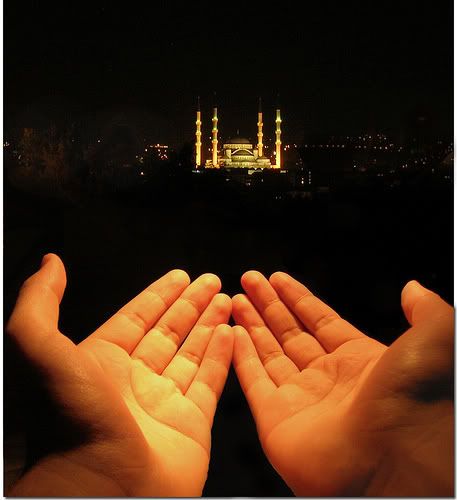
Ramadan Message 2010: Dua

Ramadan Message 2010: Patience


Wednesday, August 25, 2010

Ramadan Dua Accepted

Ramadan Message: Ramadan Dua Accepted?

Ramadan Messages and Daily Reminders for 2010
Day 15

In a previous article, we discussed the importance of making dua (supplication) to Allah. Making dua to Allah is encouraged throughout our lives. But this is highly recommended during Ramadan because Allah will grant a fasting person his wishes, if what is asked for is good for him, and He deems it so. There is no one thing that you can ask for that would be too small and insignificant. Allah is indeed all-powerful, all-merciful, and all-giving, that we may fear what we regard as important to us may be in reality "not worthy" to be asked for to Allah.

But remember that Allah has told us to make dua.

“And when my slaves ask you (O Muhammad) concerning Me, then (answer them) I am indeed near. I respond to the invocations of the supplicant when he calls on Me. So let them obey Me and believe in Me, so that they may be led aright.”
(Holy Quran, 2: 186)

And He, in His infinite Mercy, also says: “Who else is there that responds to the call of the one in distress when he calls out, and He removes evil from him? ...Is there any other God besides Allah? Little is it that you remember!”
(Holy Quran, 27:62)

However, it is not uncommon for people to complain that they have asked God for something, but they have not received it. They become upset when their prayers and dua to Allah is not answered. They feel hope ebb away, and start to feel resentful.

One muslimah writes to us:

"For the last two Ramadans, I had fasted sincerely, and I had been more attuned to the spiritual aspect of the holy month. I made an effort to pray my obligatory 5 daily prayers during the month, where before I had skipped prayers. I read the Quran. I also made vows to be a better Muslim and be true to my religious obligations. I did so because I felt my life was heading in a direction I did not like. I also wanted to get married, but it did not seem to be happening for so many reasons. Meanwhile, all my friends were moving on to the next chapter of their lives, marrying and starting families. So my Ramadan dua for the last two years had been simply for Allah to make my life easier so that I could finally get married. But this has not happened. Now it is my third Ramadan, and I still have the same wish. But part of me, thinks it is hopeless to ask this of Allah again. I should perhaps not ask for this anymore. Sometimes, I feel upset, but then I wonder if it could it be my fate not to be married? But then my life is not perfect, and I have not kept up to my vows to be better, so could that be the reason? Because of such thoughts, I find myself not as "sincere" this Ramadan - I am more tired physically, and have skipped prayers. Then I feel bad about it."

If you are at this point, then please have the good conscience, to step away from the negative feelings and contemplate on whether or why your dua has not been accepted or answered.

Some things to think about on why your dua may not be accepted:


1. Praying to other than Allah (SWT):

Allah (SWT) said: “And the places of worship are for Allah (alone): So invoke not anyone along with Allah (72:18). He (SWT) also says, “So invoke not with Allah another god lest you should be among those who receive punishment.” (26:213)

2. Hastiness in Dua:

We make dua and expect it to be answered the next morning, at the latest. We should be patient when making dua to be answered. The Prophet (SAW) said: “Your supplication will be answered if you are not impatient, and if you do not say, ‘I supplicated but my supplication was not heard.’” (Malik)

The Prophet (SAW) said: “The supplication of a slave continues to be granted as long as he does not supplicate for a sinful thing or for something that would cut off the ties of kinship and he does not grow impatient.” It was said: “O Messenger of Allah! What does growing impatient mean?” He (SAW) said, “It is one's saying: ‘I supplicated again and again but I do not think that my prayer will be answered.’ Then he becomes frustrated (in such circumstances) and gives up supplication altogether.”

This shows that Dua should be continuous, and that we should avoid giving up our Dua because it has not been responded to at a time that we see fit. For Allah (SWT) is The Wise and we know that no Dua is ever wasted! This does not mean however, that we cannot pray that our Dua be answered quickly, for it has been narrated that the Prophet prayed for rain and said "quickly, and not delayed." (Ibn Majah)

3. Impurity of one’s sustenance:

Allah (SWT) said: “O you who believe! Eat of the good things that We have provided for you…” (2:172). It is important that one’s income be lawful and free from interest as the Prophet (SAW) said, “Make wholesome your earning, Allah will accept your Dua.”

The Prophet (SAW) made mention of a person who travels widely, his hair disheveled, and covered with dust. “He lifts his hands and makes supplication, ‘O Lord, O Lord,’ but his diet is unlawful, his drink is unlawful, and his clothes are unlawful, and his nourishment is unlawful. How then can his supplication be accepted?” (Muslim and Ahmad)

4. Not being assertive on what he asks for:

Abu Hurairah reported that the Prophet, peace be upon him, said, “None of you should say, ‘O Allah, forgive me if You wish, (or) O Allah, have mercy on me if you wish.’ Rather you should be firm in your request, for (Allah does whatever He wishes) and no one can force Him to do otherwise.”

5. Neither enjoins good nor forbids evil:

The Prophet (SAW) said, “By Him in Whose Hand my life is, you either enjoin good and forbid evil, or Allah will certainly soon send His punishment to you. Then you will make supplication and it will not be accepted.” (At-Tirmidhi)

6. Not praying with humility and submissiveness:

Allah (SWT) said: “So call you upon (or invoke) Allah with sincere devotion to Him (Alone)…” (40:14) The Prophet (SAW) said, “Make dua to Allah in a state that you are certain that your dua will be responded to, and know that Allah does not respond to a dua that originates from a negligent, inattentive heart” (Tirmidhi). It is the one who prays with no humility and submissiveness, whose heart is negligent and inattentive.

7. Striving actively to change oneself first:

Allah (SWT) said: “…Verily, Allah will not change the (good) conditions of a people as long as they do not change their state (of goodness) themselves (by committing sins and by being ungrateful and disobedient to Allah)”

So the next time you think that your dua hasn’t been answered and you want to give up think again and keep trying because Allah is always near.

“And Your Lord said: Call on Me, I will answer you”
(Holy Quran, 40:60)


Source:http://www.ramadan.com.au/why-is-my-dua-not-accepted


Hopefully, the muslimah does not lose hope. She needs to have faith that her dua will be accepted, assuming she continues to be sincere in her words and actions. InshaAllah, her dua will be accepted in due course, if it something Allah deems good for her.

Friday, August 20, 2010

Ramadan Message 2010: Showing Gratitude

Ramadan Messages and Daily Reminders for 2010
Day 10


Some of you may feel weary and tired during Ramadan, and that is normal because we are fasting, and yet continuing with life's many responsibilities from housework, child-rearing, school and work. But we hope these short but insightful Ramadan reminders will inspire you to persevere through times of difficulties during this Ramadan. InshaAllah.


Prophet Muhammad (peace be upon him) said: "He is successful who has accepted Islam, who has been provided with sufficient for his wants and been made contented
by Allah with what He has given him."


"If you count God's blessings, you can never encompass them all.
Indeed, the human being is transgressing, unappreciative."
Quran 14:34

"Say, "Nothing befalls us, save what God has decreed for us. He is our Lord and Master. In God the believers shall trust."
Quran 9:51


The Importance of Showing Gratitude

When good things come over way, we are happy and content. We neglect to realize that the good in our lives come from God, and we neglect to show proper gratitude to God for it. We take for granted the many good things that God has given us - our family members, our friends, our health, and even our ability to see, hear, speak and reason! And yet we constantly yearn for more than what we have, and then get depressed or angry when what we desire is not forthcoming. Then we begin to question God - how dare us?!

Wanting more is human nature, and wanting more is not necessarily a sin. But it is important to be thankful for what we do already have. Why should God answer our prayers for more, when we do not show Him the proper gratitude for the things we already have?

True believers are aware that all good things that happen to them in life surely come from God alone. This message is quite clear in the Quran. Believers are also assured that no one other than God has any power to harm or benefit them, for nothing befalls them except what God has decreed.

Only those who are genuinely content with what they already have, will be the ones to attain true happiness in this life. After all, it has been said that true happiness is not having what you want, but wanting what you have.

The Salaf and their Gratitude
Taken from 'Patience and Gratitude'
By Ibn Qayyim


Thursday, August 19, 2010

Ramadan Message 2010: Charity

Ramadan Messages and Daily Reminders for 2010
Day 9


Some of you may feel weary and tired during Ramadan, and that is normal because we are fasting, and yet continuing with life's many responsibilities from housework, child-rearing, school and work. But we hope these short but insightful Ramadan reminders will inspire you to persevere through times of difficulties during this Ramadan. InshaAllah.

Prophet Muhammad (saw) said: "Richness does not lie in the abundance of worldly goods, but richness of the richness of the soul (heart, self)"


(Have you seen the one who denies the Religion? Such is he who repulses the orphan, and who does not urge others to feed the poor. Woe to worshippers, who are absent-minded to their prayer, those who make a show (of piety), and refuse to render small acts of kindness (towards others).) (Al-Ma`un 107: 1-7).


Prophet Muhammad(saw) said: "It is imperative on every one to render acts of charity every single day that sun shines in the sky in order to express gratitude to Allah for every single joint or faculty in his body. It is charity to restore peace between two people with strained relations, it is charity to give a stranded person a ride on his mount or lift his load onto it, it is charity to utter a good word, every step one takes towards mosque for prayer is charity, to remove litter or objectionable things from people’s path is charity."


So please remember to do charity this Ramadan, and continue it after Ramadan, so that you can ensure you are on the right side of the Fate that you desire. InshaAllah.

"You cannot attain to righteousness unless you spend (in charity) out of what you love." (The Holy Quran 3:92)

The Importance of Charity

Charity, for which the expression used in the Holy Quran is "spending out of what God has given you". Giving charity does not have to be only money. Charity can also be given by using your energy, talent, resources, money, possessions, or whatever else, to help and do good to those in need.

In Islam, charity is very often mentioned alongside prayer because just as the latter is man's relation with God, or man's duty towards God, the former (charity) represents his relation with his fellow-beings, and indeed with all the creation of God.

Prayer expresses love for God, submission to Him, and a desire to bring out the Divine qualities that lie hidden in every person. Charity is an expression of sympathy and benevolence towards God's creation, putting into actual practice the lessons you learn in prayer.

Wednesday, August 18, 2010

Ramadan Message 2010: Dua

Ramadan Messages and Daily Reminders for 2010
Day 8


Some of you may feel weary and tired during Ramadan, and that is normal because we are fasting, and yet continuing with life's many responsibilities from housework, child-rearing, school and work. But we hope these short but insightful Ramadan reminders will inspire you to persevere through times of difficulties during this Ramadan. InshaAllah.

Ramadan is the month in which the Holy Quran was sent down, as a guide to mankind with clear signs for our guidance and judgement.


Prophet Muhammad (saw) said: "Bear in mind that if all the people combined together to grant you some benefit, they would not be able to do it unless Allah has determined it for you. And if all of them combined together to do you harm, they would not be able to do it unless Allah has determined it for you. The pens have been set aside and writings of the Book of Fate have become dry."

So make duas (supplications) this Ramadan so that you can ensure you are on the right side of the Fate that you desire. InshaAllah.

The Importance of Making Dua and How to Do it - Video

Dua (supplication) is the most powerful weapon of the believer and a means of communicating with his Lord. Shaykh Yasir Qadhi elaborates on the status, importance and etiquette of dua' in Islam. For more information and details please refer to the book published by the speaker of the same title which is the most comprehensive work yet to be written in English on the topic, the author discusses, amongst other matters: the excellence and benefits of du'a; the types of du'a; the pre-conditions that are needed in order for a du'a to be accepted; the recommended etiquette of performing du'a; the timings and situations in which a du'a is more likely to be answered; the various factors that aid or prevent a du'a from being accepted; the relationship of du'a with the Divine Decree (qadr); the wisdom behind a delayed response, and many other relevant topics.

Yasir Qadhi was born in Houston, Texas and completed his primary and secondary education in Jeddah, Saudi Arabia. He graduated with a B.Sc. in Chemical Engineering from the University of Houston, after which he was accepted as a student at the Islamic University of Madinah. After completing a diploma in Arabic, he graduated with a B.A. from the College of Hadith and Islamic Sciences. Thereafter, he completed a M.A. in Islamic Theology from the College of Dawah. His published works include Riya'a: The Hidden Shirk, Du'aa: The Weapon of the Believer, and An Introduction to the Sciences of the Qur'an.

Ramadan Day 7 Message 2010

Ramadan Messages and Daily Reminders for 2010

Some of you may feel weary and tired during Ramadan, and that is normal because we are fasting, and yet continuing with life's many responsibilities from housework, child-rearing, school and work. But we hope these short but insightful Ramadan reminders will inspire you to persevere through times of difficulties during this Ramadan. InshaAllah.


Prophet Muhammad (saw) said: " A great month has come over you: a blessed month; a month in which is a night better than a thousand months; it is the month of patience and the reward for patience is Heaven.

Monday, August 9, 2010

The Virtues of Ramadan

Ramadan is one of the twelve Arabic months. It is a month which is venerated in the Islamic religion, and it is distinguished from the other months by a number of characteristics and virtues, including the following:

1) Allah has made fasting this month the fourth pillar of Islam, as He says:

“The month of Ramadan in which was revealed the Quran, a guidance for mankind and clear proofs for the guidance and the criterion (between right and wrong). So whoever of you sights (the crescent on the first night of) the month (of Ramadan i.e. is present at his home), he must observe Sawm (fasts) that month…”
[al-Baqarah 2:185]

and it was narrated in al-Saheehayn (al-Bukhaari, 8; Muslim, 16) from the hadith of Ibn ‘Umar that the Prophet (peace and blessings of Allah be upon him) said: “Islam is built on five (pillars): the testimony that there is no god except Allah and that Muhammad is the Messenger of Allah; establishing prayer; paying zakat; fasting Ramadan; and Hajj to the House (the Kabah).”

2) Allah revealed the Quran in this month, as He says in the verse quoted above:

“The month of Ramadan in which was revealed the Quran, a guidance for mankind and clear proofs for the guidance and the criterion (between right and wrong)…”
[al-Baqarah 2:185]

And Allah says:

“Verily, We have sent it (this Quran) down in the Night of Al-Qadr (Decree).”
[al-Qadr 97:1]

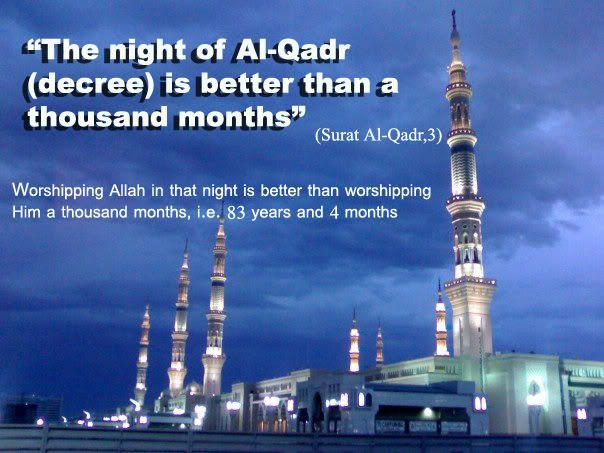
3) Allah has made Laylat al-Qadr in this month, which is better than a thousand months, as Allah says:

“Verily, We have sent it (this Quran) down in the Night of Al-Qadr (Decree).

And what will make you know what the Night of Al-Qadr (Decree) is?

The Night of Al-Qadr (Decree) is better than a thousand months (i.e. worshiping Allah in that night is better than worshiping Him a thousand months, i.e. 83 years and 4 months).

Therein descend the angels and the Rooh [Jibreel (Gabriel)] by Allaah’s Permission with all Decrees,
(All that night), there is peace (and goodness from Allaah to His believing slaves) until the appearance of dawn”
[al-Qadar 97:1-5]

“We sent it (this Quran) down on a blessed night [(i.e. the Night of Al-Qadr) in the month of Ramadan — the 9th month of the Islamic calendar]. Verily, We are ever warning [mankind that Our Torment will reach those who disbelieve in Our Oneness of Lordship and in Our Oneness of worship]”
[al-Dukhaan 44:3]

Allah has blessed Ramadan with Laylat al-Qadr. Explaining the great status of this blessed night, Surat al-Qadr was revealed, and there are many a hadith which also speak of that, such as the hadith of Abu Hurayrah (may Allah be pleased with him) who said: The Messenger of Allah (peace and blessings of Allah be upon him) said: “There has come to you Ramadan, a blessed month which Allah has enjoined you to fast, during which the gates of heaven are opened and the gates of Hell are closed, and the rebellious devils are chained up. In it there is a night which is better than a thousand months, and whoever is deprived of its goodness is indeed deprived.”
Narrated by al-Nasaa’i, 2106; Ahmad, 8769. classed as saheeh by al-Albaani in Saheeh al-Targheeb, 999.

And Abu Hurayrah (may Allah be pleased with him) said: The Messenger of Allah (peace and blessings of Allah be upon him) said: “Whoever spends Laylat al-Qadr in prayer out of faith and in the hope of reward, will be forgiven his previous sins.” Narrated by al-Bukhari, 1910; Muslim, 760.

4) Allah has made fasting Ramadan and spending its nights in prayer out of faith and in the hope of reward a means of forgiveness of sins, as was proven in al-Saheehayn (al-Bukhaari, 2014; Muslim, 760) from the hadith of Abu Hurayrah according to which the Prophet (peace and blessings of Allah be upon him) said: “Whoever fasts Ramadan out of faith and in the hope of reward, his previous sins will be forgiven.” And al-Bukhaari (2008) and Muslim (174) also narrated from Abu Hurayrah that the Prophet (peace and blessings of Allah be upon him) said: “Whoever spends the nights of Ramadan in prayer out of faith and in the hope of reward, his previous sins will be forgiven.”

The Muslims are unanimously agreed that it is Sunnah to pray qiyaam at night in Ramadan. Al-Nawawi said that what is meant by praying qiyaam in Ramadan is to pray Taraweeh, i.e., one achieves what is meant by qiyaam by praying Taraaweeh.

5) In this month, Allah opens the gates of Paradise and closes the gates of Hell, and chains up the devils, as is stated in al-Saheehayn (al-Bukhaari, 1898; Muslim, 1079), from the hadith of Abu Hurayrah who said that the Messenger of Allah (peace and blessings of Allah be upon him) said: “When Ramadan comes, the gates of Paradise are opened and the gates of Hell are closed, and the devils are chained up.”

6) Every night Allah has people whom He redeems from the Fire. Imam Ahmad (5/256) narrated from the hadith of Abu Umaamah that the Prophet (peace and blessings of Allah be upon him) said: “At every breaking of the fast, Allah has people whom He redeems.” Al-Mundhiri said: there is nothing wrong with its isnaad; and it was classed as saheeh by al-Albaani in Saheeh al-Targheeb, 987.

Al-Bazzaar (Kashf 962) narrated that Abu Sa’eed said: The Messenger of Allaah (peace and blessings of Allah be upon him) said: “Allah has people whom He redeems every day and night – i.e., in Ramadan – and every Muslim every day and night has a prayer that is answered.”

7) Fasting Ramadan is a means of expiation for the sins committed since the previous Ramadan, so long as one avoids major sins. It was proven in Saheeh Muslim (233) that the Prophet (peace and blessings of Allah be upon him) said: “The five daily prayers, from one Jumu’ah to the next and from one Ramadan to the next are expiation for (sins committed) in between, so long as you avoid major sins.”

8) Fasting in Ramadan is equivalent to fasting ten months, as is indicated by the hadith in Saheeh Muslim (1164) narrated from Abu Ayyoob al-Ansaari: “Whoever fasts Ramadan then follows it with six days of Shawwaal, it will be like fasting for a lifetime.” Ahmad (21906) narrated that the Prophet (peace and blessings of Allah be upon him) said: “Whoever fasts Ramadan, a month is like ten months, and fasting six days after al-Fitr will complete the year.”

9) Whoever prays qiyaam in Ramadan with the imam until he finishes, it will be recorded for him that he spent the whole night in prayer, because of the report narrated by Abu Dawood (1370) and others from the hadith of Abu Dharr (may Allah be pleased with him) that the Messenger of Allah (peace and blessings of Allah be upon him) said: “Whoever prays qiyaam with the imam until he finishes, it will be recorded for him that he spent the whole night in prayer.” Classed as saheeh by al-Albaani in Salaat al-Taraaweeh, p. 15

10) ‘Umrah in Ramadan is equivalent to Hajj. Al-Bukhaari (1782) and Muslim (1256) narrated that Ibn ‘Abbaas said: The Messenger of Allah (peace and blessings of Allah be upon him) said to a woman among the Ansaar, “What kept you from doing Hajj with us?” She said, “We only had two camels that we used for bringing water.” So her husband and son had gone for Hajj on one camel, and he left the other for them to use for bringing water.” He said, “When Ramadan comes, go for ‘Umrah, for ‘Umrah in Ramadan is equivalent to Hajj.” According to a report narrated by Muslim, “… is equivalent to doing Hajj with me.”

11) It is Sunnah to observe i’tikaaf (retreat for the purpose of worship) in Ramadan, because the Prophet (peace and blessings of Allah be upon him) always did that, as it was narrated in the hadith of ‘Aa’ishah (may Allah be pleased with her) that the Prophet (peace and blessings of Allah be upon him) used to spend the last ten days of Ramadan in i’tikaaf until he passed away, then his wives observed i’tikaaf after him.” Narrated by al-Bukhaari, 1922; Muslim, 1172.

12) It is mustahabb in the sense of being strongly recommended in Ramadan to study the Quran together and to read it a great deal. You may study the Quran together by reciting it to someone else and by having someone else recite it to you. The evidence that this is mustahabb is the fact that Jibreel used to meet the Prophet (peace and blessings of Allah be upon him) every night in Ramadan and study the Quran with him. Narrated by al-Bukhaari, 6; Muslim, 2308.

Reading Quran is mustahabb in general, but more so in Ramadan.

13) It is mustahabb in Ramadan to offer iftar to those who are fasting, because of the hadith of Zayd ibn Khaalid al-Juhani (may Allah be pleased with him) who said: The Messenger of Allah (peace and blessings of Allah be upon him) said: “Whoever gives iftar to one who is fasting will have a reward like his, without that detracting from the fasting person’s reward in the slightest.” Narrated by al-Tirmidhi, 807; Ibn Maajah, 1746; classed as saheeh by al-Albaani in Saheeh al-Tirmidhi, 647. see question no: ( 12598 )

And Allah knows best.
Source: Islam Q&A

Wednesday, October 1, 2008

Eid Mubarak


May Allah accept all of our prayers and good deeds
during the blessed month of Ramadan.

Tuesday, September 30, 2008

Ramadan Message 2008 - Day 30 (What To Do After Ramadan?)

“He who observed the fast of Ramadan and then followed it with six (fasts) of Shawwal, it would be as if he fasted perpetually.” (Muslim)


WHAT NEXT AFTER RAMADAN?

For the next few days after Ramadan, we will feel like we are still fasting - avoiding munching and not eager to have a drink. This is normal and natural. After all, we ahve conditioned our bodies not to take food or drink during the day time.

But it is only only in visible in our food habits. We changed our behavior as well during Ramadan - the habit of avoiding lies, vain talk and foul languages, the small sadaqah, tolerance, paying attention to others’ needs and seeking opportunities to help out in our own small ways.

Some psychologists have opined that a good habit takes about three weeks for most people to imbibe. Hence, all the dos and don’t in Ramadan should be easy to keep up after those 4 weeks of intensive Ramadan training, if we have a strong will.

For many millions of Muslims, Ramadan is their month of Islamic identity. This is when they get to show that they are Muslims. This is when they get to do their best in the practise of their deen. They get seen in the mosque in this month more than the whole of the remaining months put together. They are motivated by the rewards accruable therein. Some will thereafter, keep the spiritual goodies of Ramadan long after Ramadan, while others return to their old way of life the moment Ramadan ends. But that is not the purpose of Ramadan. Ramadan is instituted to teach us how to live our lives during the remaining eleven months.

It has been said that the early Muslims would spend the next 6 months after Ramadan, morning its departure, holding unto the lessons derived therein, and sustaining the good deeds and the rewarding actions they picked up in the blessed month. Then they would spend the next five months preparing for the next Ramadan by guarding their actions and maintaining a taqwah state of mind.

With Allah’s guidance, we have been able make some progress this Ramadan, we need to beseech Allah to help us sustain this progress in the months after Ramadan. As with all our efforts in life, we rely on Allah to help in its constant and correct performance that will meet His acceptance.

Even the Messenger of Allah (peace be upon him) used to supplicate after every salaah: “O Allah, help me to keep Your remembrance, and in thanking You, and in keeping up with my acts of worship.” (Allahumma aa’ini, ala dhikrika, wa shukrika, wa uzni iba’datik.)

After pleading for Allah’s help in keeping up these Ramadan habits, we need a conscious effort on our part not to retreat from this progressive campaign. The best way to do this is to make it regular and constant. In fact, make it daily. Such efforts as: nawafil, sadaqah and recitation of the Qur'an should become part and parcel of our daily activities.

The Prophet Muhammad (peace be upon him) said, “Do good deeds properly, sincerely and moderately and know that…the most beloved deed to Allah is the most regular and constant even though it were little.” (Bukhari) Also fast at least three days in a month if we cannot keep up with the Monday and Thursday weekly fasts.

Then we should make it a duty to evaluate ourselves. Make a list of the habits you have picked up in Ramadan. Then decide on how much and how often you want to carry on with these habits outside Ramadan. With this checklist, you can monitor yourself. Daily could be too cumbersome, but a daily thought about yourself before you sleep is helpful. Weekly is more ideal.

Evaluating oneself is the most difficult job. Most such checklist of goals and plans rarely get written down, and they are hardly regularly checked or evaluated. However, we can achieve this in a group of two close friends watching over each other, comparing notes and activities in a sincere and healthy way. Furthermore, neighbourhood groups dedicated to Qur'an memorisation and knowledge sharing could help to maintain some habits well beyond Ramadan.

Finally, live in fear and hope. Live in fear of death claiming your life and you may meet Allah with loads of shortcomings and inadequacy of good deeds. Live in hope that Allah will reward all your efforts and good intentions. This should keep you going and ensuring that your habits are never abandoned for you do not know which actions of yours will meet with Allah’s mercy, or which inaction of yours could cause your disgrace in the Hereafter. Live with the thoughts of standing before Allah to account for how you always lose your habit immediately after Ramadan and never delivering the goods as expected of you. May Allah save us from such accountability.

Monday, September 29, 2008

Ramadan Message 2008 - Day 29 (Day of Eid)


WHAT TO SAY ON EID DAY?

WHAT TO SAY ON EID DAY? The day of Eid starts with the chanting of the takbir. On the way to the Eid ground, it is takbir. On the way back it is takbir. From 'Umar and ibn Mas'ud gave the following narration for the takbir: "Allahu akbar. Allahu akbar. La ilaha illallah. Allahu akbar. Allahu akbar wa lillahil-hamd." Translation: Allah is the greatest, Allah is the greatest. There is no God but Allah. Allah is the greatest, Allah is the greatest. All praise belongs to Allah.

The Day of Eid starts with the chanting of the takbir. On the way to the Eid ground, it is takbir. On the way back it is takbir. From 'Umar and ibn Mas'ud gave the following narration for the takbir: "Allahu akbar. Allahu akbar. La ilaha illallah. Allahu akbar. Allahu akbar wa lillahil-hamd." Translation: Allah is the greatest, Allah is the greatest. There is no God but Allah. Allah is the greatest, Allah is the greatest. All praise belongs to Allah.

We praise and thank Allah for sparing our lives to witness this year's Ramadan. Most Muslims today would be happy to see the end of Ramadan, but our seniors in faith used to be sad. First, because they were not very sure their if all of their efforts would be acceptable to Allah. Then, they were not sure if they were able to witness the Night of Power. Further, a month of mercy is going, what joy is in that. Then they would feel sad that they may never be able to see another Ramadan again. We pray Allah give us such iman, piety and understanding.

On the Eid day, we must not fast. Even if we start the day fasting, once it is announced that the moon has been sighted in your community, we are to break that fast, and proceed to perform Eid (if it is still morning) or prepare the next day for Eid.

We must not fast on Eid day even if we vow to fast that day or it is customary for us to fast on that particular day, which now happens to be Eid. "A man vowed to fast one day (possibly a Monday), and that day happened to be Eid day." Ibn 'Umar said, "Allah orders vows to be fulfilled and the Prophet forbade the fasting on this day (i.e. Eid)." (Bukhari)

The Eid of the next few days is Eid-il-Fitr, which the Prophet used to eat before going for the Eid prayers (whereas he doesn't eat for the Eid of the Adha [Sacrifice]). Buraidah reports: "The Prophet would not go out on the day of breaking the fast (Eid-il-Fitr) until he had eaten and on the day of sacrifice (Eid-il-Adha) he would not eat until he had returned [from salaah]." (Tirmidhi)

He encouraged people to wear the best of their clothing. Therefore, we are encouraged to give the Eid our best appearance, with perfumed (the men) and in gold or other jewelry(the women). We are advised to go out in multitude, with all our families and chanting the dhikr.

On your way to and from Eid prayers, you should greet with the salaam and offer a congratulatory prayer to people. "When the companions of the Prophet met each other on the day of 'id, they would say to each other, 'taqabbal minna wa minka [May Allah] accept it from us and you.'" (Ibn Hajar)

There is no nawafil prayer before and after the Eid prayers. Ibn 'Abbas reports: "The Messenger of Allah went out to the site of the E'id prayer and prayed two rakaah of the Eid prayer without praying anything before or after it." (Bukhari) It is usually performed on an open ground on. However, if for some reason we are not able to do this, we are allowed to use the mosque. "The rain fell on the day of 'Id (festival), so the Prophet (peace be upon him) led them (the people) in the Eid prayer in the mosque." (Abu Dawud) After the prayer comes the sermon, both are obligatory for us to consciously observe.

However, if you get to the Eid ground late, do not panic, remember it is a festive day. "If one misses the Eid prayers, he may pray two raka’ah and the same is the case for the women or people in their houses or in the countryside. This is based on the Prophet's words: "O Muslims, this is our festival." Anas ibn Malik ordered his protege (Ibn abi-'Utbah), [who lived] in a remote area, to gather his family and children and to pray [the Eid prayer] like the people in the city and with takbirat similar to theirs. 'Ikrimah said: "The people of the country should gather for the 'id and pray two rakaah as the imam does." 'Ata says: "If you miss the Eid [salaah], pray two rakaah." (Bukhari)

It is also important for women to attend the Eid prayer, even if they are off salaah or poor. They should be dressed up for the day and they are allowed to enjoy the day. Once she asked, "O Allah's Messenger! If a woman has no veil, is there any harm if she does not come out (on 'Id day)?" The Prophet said, "Her companion should let her share her veil with her, and the women should participate in the good deeds and in the religious gatherings of the believers."' (Bukhari 2:96)

Sunday, September 28, 2008

Ramadan Message 2008 - Day 28 (Reminders Before Eid)

“That which you give in usury in order that it may increase on (other) people's property has no increase with Allah; but that which you give in charity, seeking Allah's countenance, has increase manifold. It is Allah Who has created you: further He has provided for your sustenance; then He will cause you to die; and again He will give you life. Are there any of your (false) "Partners" who can do any single one of these things? Glory to Him! And High is He above the partners they attribute (to Him)!"
(Qur'an 30 Verses 39-40)


The spirit of sharing and selflessness should be second nature to a Muslim. For a Muslim, the best way to get is by giving. The notion of social welfare for those on the lower ramp of the wealth ladder is directly entrenched in the pillars of Islam.

The zakaah, the 3rd pillar, is obligatory tax from the wealth for the poor and needy. However, there are other subtle means of encouraging the not so wealthy to give too. Generally, we are encouraged to be generous.

This is perfectly exemplified by our Prophet Muhammad (peace be upon him), who said: “O son of Adam, it is better for you if you spend your surplus (wealth), but if you withhold it, it is evil for you. There is (however) no reproach for you if you must withhold necessarily for survival. And begin (charity) with your dependants; and the upper hand is better than the lower hand.” (Muslim)

Fellow feeling and sharing is also an important lesson of Ramadan. The Prophet (peace be upon him) “…was the most generous amongst the people, and he used to be more so in the month of Ramadan when Angel Jubril visited him, …he used to be more generous than a fast wind (which causes rain and welfare).” (Bukhari)

This spirit of fellow feeling and selfless generosity strengthens our communal life. We look out for one another. We live for one another; like bricks supporting one another, forming a solid building.

Sadaqatul Fitr (sometimes called Zakatul-Fitr) is the obligatory material help extended to the poor of the society. It is given within a few days to the Eid day or on the day but before going for the Eid Prayer. (Bukhari) The recipient of the money is then able to prepare for the Eid celebration like the rest of the people. If we give Sadaqatul-Fitr early, the recipient is also able to plan early for the Eid celebration.

The Prophet (peace be upon him) made it incumbent upon the head of every able household to give the Sadaqatul-Fitr on all Muslim male and female members of the household (young or old, those who were able to fast and those who did not fast). Ibn Umar reported: “Allah’s Messenger (peace be upon him) ordered Sadaqatul-Fitr on behalf of the young and the old and the free and the slave –whoever you provide for.” (Baihaqi)

Sadaqatul Fitr is not a substitute for zakaah. Rather, it complements it. Sadaqatul-Fitr is obligatory even on those who may not be qualified to pay the Zakaah. Ramadan season is rounded up with the Sadaqatul-Fitr and the Eid prayer.

Four (4) handful (both hands cupped together) scoops of grain is the recommended quantity of Sadaqatul-Fitr per person. This is approximated as the equivalent to 1.75 kilograms of wheat or about 2.50%.

You may seek a poor household to benefit from your Sadaqatul-Fitr or you may give it to the designated body (charity groups) or the Imam of your local masjid to dispense on your behalf.

By helping the poor, we also help ourselves to gain Allah’s boundless bounty and infinite mercy, insha’Allah.

Ibn Abbas reported: “The Messenger of Allah (peace be upon him) enjoined Zakatul Fitr on the one who fasts to shield himself from any indecent act or speech, and for the purpose of providing food for the poor. It is accepted as Zakatul-Fitr for the person who pays it before the Eid salaah and it is a mere sadaqah for one who pays it after the salaah.” (Abu Dawud, Nasai & Ibn Majah).

Saturday, September 27, 2008

Ramadan Message 2008 - Day 27 (Gift For Eid)

Gift for Eid

Let us make the Eid a real memorable day. How about some Eid (festival) gifts for all the children in the house or neighbourhood? This is indeed a great time for them to be rewarded for their Ramadan participation and support. It is also a good time to reward them for their studies and domestic contribution.

We should make it a wholesome and weighty gift, a charitable act to look forward to every year.

“The upper hand is better than the lower hand (i.e. he who gives in charity is better than him who takes it). One should start giving first to his dependents…” (Bukhari)

The Eid day is the day of happiness and efforts should be geared towards making it so. Even the Rasul allowed the children to sing and dance around his house. He told Abu Bakr not to caution them, because “It is the day of Eid –Celebration.” What arrangement can you make to make this Eid memorable for the kids around you? What entertainment do you have in stock for them?

Our spouses should also be generously rewarded. One way or another they must have made our Ramadan eventful. Perhaps it could be a motivation to do more next year. It could even be in form of a surprise between couples. It is a great day for the Muslim women. Such that the Prophet encouraged them to go for the Eid even if they are menstruating, they are encouraged to be there, to have fun and feel the celebration. Even if they have no dress, they should borrow some and have a happy outing.

Umm Atiya narrated that, “We were ordered to bring out our menstruating women and the veiled virgin women into the gatherings of the two 'Id festivals. These menstruating women were to keep away from their Musalla (prayer ground). A woman asked, "O Allah's Messenger, what about one who does not have a veil?" He (peace be upon him) said, "Let her share the veil of her companion."

We should also extend the gift to our neighbours and friends. Prophet Muhammad (peace be upon him) said: "Give presents to one another, for a present removes rancour from the breast, and a woman should not despise even the gift of half a sheep's trotter from her neighbour."

In our celebration, let us not forget that we are Muslims. We are still bounded to the injunctions of Allah about what is halal and what is haram. We do not celebrate with whatever Allah has declared as unlawful (for instance, intoxicants, zina –adultery or fornication, gambling, etc.)

In fact, it is a grievous sin to commit an act of disobedience of Allah on an Eid day. It lays to waste our struggles and strivings in Ramadan. If we do so, it goes to show that we have learnt nothing from the purposes of Ramadan.

So celebrate in all ways, but avoid the haram. Remember the shari’ah principle: All good and pure things are halal (permissible) for Muslims, except those which Allah and His Messenger have delineated as haram or makruu (forbidden or disliked).

Friday, September 26, 2008

Ramadan Message 2008 - Day 26 (The Muslim Character)

Is he, then, to whom the evil of his conduct is made alluring, so that he looks upon it as good, (equal to one who is rightly guided)? For Allah leaves to stray whom He wills, and guides whom He wills. So let not thy soul go out in (vainly) sighing after them: for Allah knows well all that they do!
(Quran, Surah 35 Verse 8)


The character of a Muslim are laid out clearly in the Qur'an and is amply illustrated in the personality of the Prophet as told in the Hadith. We are genetically fashioned to have distinct characteristics. However, the Muslim will consciously groom his character; he does not allow it to flourish waywardly, untrimmed and unguarded. Below are a few highlights, which characterises the nature and orientation of the believer.

 A Muslim is a person, man or woman, who submits him to Allah, believing in His Oneness and in His Messengers. He has no doubt therein. [Are you an all-weather believer? Do you mix your faith with culture, nationalism or racism?]

 He is obedient to Allah and to Prophet Muhammad. He does not pick and chose when to obey. His is a wholehearted submission (Quran 2 Verse 208).

 He is conscientious with his Salaah, generous in giving of Sadaqah & Zakaah, fasts regularly and most especially in the month of Ramadan; and he behold the hajj no grudge. [Did you fast at least 10 days in the months aside from Ramadan?]

 He is truthful in speech and in deed (Qur'an 33 Verse 70-71). He is patient and humble in his disposition. (Qur'an 2 Verse 45) [Are you able to control your anger even outside Ramadan?]

 He guards strictly his chastity and remembers Allah abundantly and regularly with his tongue and his hearts. Hence his inward acclimatisation translates to an outward healthy disposition.

 He does not argue with revelation, nor does he alter (or seek to undermine) that which Allah and His Prophet have decided (Qur'an 33 Verse 36). [Do you refer to the Qur'an and Sunnah as against conjecture, common sense or cultural practises when guidance is required?]

 He is conscious of his nature and the nature of all the things around him. He seeks not to change the fair nature of what Allah has created (Qur'an 30 verse 30). Otherwise he would be competing with Allah in His attributes of being the Maker, Creator, Fashioners and Moulder.

 He has a good family and sex orientation. He seeks not to destroy the family by engaging in or promoting fornication and adultery, nor does he seek to evil relationships, which led to the destruction of people before us. Hence, he does not partake in sex outside marriage, or sex with same sex or an unnatural sexual acts.

 He is patient with people, not aggressive; he is understanding and tolerating. He does not judge people by their appearance, nor is he prejudiced. He believes in the humane and just treatment of everyone, Muslims and non-Muslims, knowing that Allah is the ultimate judge.

 He hopes and prays for Paradise and does not attribute Paradise to himself or assure others of their Hell-Fire destination.

In conclusion, good intentions (ikhlas niyyah), true faith, devotion to worship, and a good exposure to the nature of the Rasul define a beautiful character. This will translate into kindness, understanding, politeness, a belief in Allah’ Justice, fair dealing in action, a love for all things created by Allah, a capacity for mercy & forgiveness, and a desire to be clean. Your character is yours and it is a result of your values and perceptions. But just like your body, your character is an amanah (trust upon you by Allah); you are accountable to Allah about what you did to it.

Thursday, September 25, 2008

Ramadan Message 2008 - Day 25 (What Type of Muslim Am I?)

“Do you enjoin right conduct on the people and forget (to practice it) yourselves and yet you study the Scripture? Will you not understand?” (Qur'an 2 Verse 44)

“When the Hypocrites come to you, they say: 'We bear witness that you are indeed the Messenger of Allah.' Yea Allah knows that you are indeed His Messenger and Allah bears witness that the Hypocrites are indeed liars.” (Qur'an 63 Verses 1)


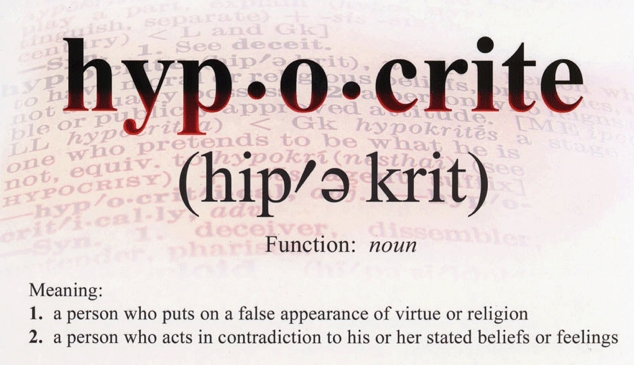
We are usually concerned about the believer and the unbelievers. But there is a third group. The hypocrites.

The Prophet said, "Whoever has the following four (characteristics) will be a pure hypocrite and whoever has one of them will have one characteristic of hypocrisy until he gives it up: one, whenever he is entrusted, he betrays; two, whenever he speaks, he tells a lie; three, whenever he makes a covenant, he proves treacherous; and finally, whenever he quarrels, he behaves in a very imprudent, evil and insulting manner." (Bukhari)

The complete hypocrites are difficult to identify. He may come as a scholar or learned person, with beard, quoting fluent Arabic and his presentation is good.

Allah confirms this: "When you look at them their exteriors (appearances) please you; and when they speak, you listen to their words..." (Qur'an 63 Verse 4).

But indeed they are nothing and their words are nothing "…they are as (worthless as hollow) pieces of timber propped up (but unable to stand on their own)." (Qur'an 63 Verse 4)

All they seek is to undermine Islam, or its unity, so their tactics is to make "… their oaths a screen (for their misdeeds): thus they obstruct (men) from the Path of Allah: truly evil are their deeds." (Qur'an 63 Verse 2)

Hypocrisy means having a double face. Some people said to Ibn 'Umar, "When we are in the presence of our rulers we say their praise which is contrary to what we say when we leave them." Ibn 'Umar said, "We used to consider this as hypocrisy." (Bukhari Vol.9 #289)

Hence they have a face with Islam and another against it. Further, their salaah is for show off. Their salaah in public is different from their salaah in private. "Lo! The hypocrites seek to beguile (deceive) Allah, but it is Allah who beguiles them. When they stand up to worship they perform it languidly and to be seen of men, and are mindful of Allah but little; swaying between this (and that), (belonging) neither to these nor to those. …" (Qur'an 4 Verses 142-143)

Some other types of hypocrites refer to Muslims who appear to always put Islam before all else as fools and extremists.

"Lo! the hypocrites and those in whose hearts is a disease say: 'these people--their religion has misled them'." (Qur'an 8 Verse 49) They are not satisfied with position, so they mock and dishonour Islam to get honour from their friends.

"Yea to those who take for friends unbelievers rather than believers: is it honour they seek among them? Nay all honour is with Allah. Already has He sent you word in the Book that when you hear the signs of Allah held in defiance and ridicule you are not to sit with them unless they turn to a different theme: if you did you would be like them. For Allah will collect the Hypocrites and those who defy faith all in hell." (Qur'an 4 Verses 138-140)

This group of hypocrites is opposed to everything Islam. They seek to contradict it and Shaytan is their guide. Allah captures their efforts thus, "the hypocrites, men and women…enjoin the wrong, and they forbid the right, and they withhold their hands (from spending for the cause of Allah). They forget Allah, so He has forgotten them. Lo! the hypocrites, they are the transgressors…." (Qur'an 9 Verses 67-68)

We shall not be cowed by their strength, affluence and efforts, we shall not be conquered by their 'da'wah of negativity', Allah urges us, "and incline not to the disbelievers and the hypocrites. Disregard their noxious talk, and put your trust in Allah. Allah is sufficient as Trustee." (Qur'an 33 Verse 48)

Their abode is not only Hell (Qur'an 9 verse 73), but "the lowest deep of the fire, and you will find no helper for them; save those who repent and amend and hold fast to Allah and make their religion pure for Allah (only). Those are with the believers. And Allah will bestow on the believers an immense reward." (Qur'an 4 verses 145-146)

Do you think you have been described in these paragraphs? Beware, the Prophet said, during the last days, a man will go to bed as a believer and will wake up (in the morning) as a disbeliever. Mind the gap! Take care of your deen.

Wednesday, September 24, 2008

Ramadan Message 2008 - Day 24 (Faith and Work)

“By the declining day, verily, man is in a state of loss,
save those who believe and do good works,
and exhort one another to truth
and exhort one another to endurance.”
(Qur'an 103 Verses 1-3)


Faith and Work

Faith is the oneness of Allah, which has three principal elements: (1) That we accept nobody but Allah as our God, (2) that we do not assume anyone but Allah as our protector, (3) and that we take only Allah as our judge. This is the meaning of the creed that there is no God but Allah.

After the oneness of Allah comes the second facet of faith, that is belief in the message of the Prophet Muhammad (PBUH), and that Muhammad is His Messenger. He is neither a God, nor the son of a God, nor the Holy Spirit, nor an incarnation of God. He is only the servant of Allah and His Messenger. God Revealed His Book to him and he passed on to the people what God Revealed to him. He neither betrayed, nor did he conceal the truth, nor did he speak vainly.

"It is no less than inspiration sent down to him." (Surah 53, Verse 4)

Among the pillars of the faith that Muhammad (PBUH) received from his God, is belief in the Hereafter and in punishment, and that death is not an end in itself. There is an eternal life after our ephemera life, when each person is given everything that he has earned and thanked by his good deeds.

"And whosoever does good an atom's weight will see it then, and whosoever does ill an atom's weight will see it then." (Surah 99, Verses 7-8)

In the life of Muslims, faith is not marginal. It is the essence of our existence, the secret of our living and the gist of our message. Without it there is no sense to our life and no reason for our being.

If each personality has a key to it, and if you discover it and use it, you will be able to discover its hidden contents and unfold the secrets of its capabilities. The key to man's personality in our religion is faith.

And as it is possible to set a car, a ship or an aeroplane in motion and to set it forward just by the touch of a key, or the push of a button and to use them to travel long distances, it is also possible with the effect of faith to move the emotions of this nation and to use it to make miracles and exploits of championships which can be related like legends.

Many have struck different strings in order to move this nation, but it has neither moved nor has it responded. They have struck the nationalist string, and the socialist string, the democracy string, but have achieved nothing other than crises and catastrophes.

But when you lead this nation with the Qur'an, you hold it high and the same when you call "Allah is Great" and when you invoke the breeze of Paradise. Then you will find that the people respond in millions and are ready to die for the sake of Allah. This faith which is instilled in the innate character of the nation, and stored in its moral make-up is like a healthy seed in a healthy earth. We must take care of it, raise it, protect it and feed it. We should also covet it and preserve it from any poisonous substances or evil insects in order to allow it to grow, improve and mature so that it gives its fruit with the will of God.

The Muslim is required to work for his living and to be productive and creative, until the very end of his life. He should not procrastinate in the working of the land, and this is what Allah's Messenger (PBUH) taught us when he said: “If the world is about to end and one of you has a palm tree plant in his hand, he should plant it before he dies, if he can.”

Why should he plant it if the world is about to end? Why should he plant it if he is not going to live till he can pick its fruit? There is not even somebody who is going to live after him so that he can say: "People before us planted so that we can eat, and we are planting to provide those after us with food," because when the world ends it ends for everybody. The idea here is to glorify work for the sake of work and to keep the Muslim productive and creative until the last moment of his life, and as long as he is able to work.

If this is required for man's worldly matters, how could it be possible that the same would not be asked of his religious activity? How can religion be lower in priority than worldly matters?

The Muslim is required to observe the commands of his religion as much as he can. He should advise people to do good deeds and to be charitable and to avoid committing evil deeds. They should fight for the cause of Allah, and against evil and decadence. They should also collaborate with their brother Muslims in doing good and worshipping Allah. The texts which have come with all these commands have not been abolished, and are not specific to a particular time. They are permanent and will be there until Allah inherits the land and its inhabitants.

–Shaykh Yusuf Qaradawi, Towards A Sound Awakening.

Tuesday, September 23, 2008

Ramadan Message 2008 - Day 23 (The Father of the Early)

“Lo! Those who believe and do good works and humble themselves before their Lord: such are rightful owners of the Garden; they will abide therein.”
(Quran 11 Verse 23)


Abu Bakr, meaning the father of the early, was so called for he was the first adult Male to accept Islam. He was also the first caliph (ruler of the Muslim community after the Prophet passed away). What were his contributions to Islam?

After he accepted Islam, he reached out to convert others, including Uthman who became the third caliph. Then he bought and set free, several slaves who had accepted Islam, including Bilal the most famous Black Muslim in Islamic history.

He was the largest financier of the Islamic State. On one occasion, the Prophet was raising funds for a particular jihad, and Umar was determined to do more than Abu Bakr this time around. So he divided his properties into two and brought a half of it to the Prophet. But when Abu Bakr came, he brought all his properties. The Prophet, in his amazement, asked, what have you left for your family? His response was, I left them Allah and His Messenger. Umar gave up thereafter.

When the Prophet died, people were mystified and perplexed. Even Umar was not composed. In his frenzy, he said: I shall cut off the head of whoever says the Prophet is dead, he is sleeping and would soon wake up, he is not dead.

Abu Bakr quelled the confusion. After seeing the body of the Prophet (pbuh), closed his eyes, kissed his forehead, went out and said: Whoever worshipped Muhammad, let him know that Muhammad is dead. Whoever worship Allah, Allah is Ever-Living, the Eternal and then recited Qur'an 39 Verse 30. Sanity and reality returned immediately.

Then the confusion arose as to where the Prophet will be buried. Some said Makkah, because that was where he was born. No! Madinah, because that is where he established his State. No! No!! No!!! Jerusalem because Angel Jubril took him there in one night, then he led all other Prophets in prayers and was elevated to the Heavens from there (the journey of Isra' and Miraj).

Abu Bakr resolved the issue by quoting just one hadith. He said he heard the Prophet said that Prophets are buried on the spot they die.

Then came another: who will succeed the Prophet? Is it the Helpers of Madina (Ansar), who are next since the Prophet was Makkan) or two caliphs (a Makkan and a Madinite).

Abu Bakr quoted a hadith, The Caliphate is for Quraysh (not just any Makkan). The people agreed. He volunteered Umar Al-Khattab, but they made him the caliph despite his refusal.

When he became the Caliph, he gave an important speech:

"O people, I was chosen to be the leader over you even though I am not the best from among you. If I am good and upright (in my leadership), then be of help to me. And if I go astray in my leadership then correct me. Truthfulness is a trust and lying is treachery. The weak person in my eyes is strong as I shall give him his rights, and the strong person in my eyes is weak because I shall take from him and give to the oppressed. Never do a people abandon jihad, Allah cause to descend upon them ignominy and disgrace. Anytime promiscuity (illegal sexual affairs) is allowed to spread among a people, Allah cause to descend on them calamity and disaster. Obey me as long as I obey Allah. But if I disobey Allah or his messenger then you owe me no obedience."

How wonderful will this world be if leaders are this pious, just and humble?

More importantly, these are a few of the contributions of Abu Bakr to Islam, what will yours be? What will you do for Islam? Make that answer your Ramadan Resolution, share it with no one, but live up to it sincerely, your will be rewarded for your intention and efforts.

Monday, September 22, 2008

Ramadan Message 2008 - Day 22 (Sins)

“That Day shall you be brought to Judgment:
not an act of yours that you hide will be hidden.”
(Qur'an 69 Verse 18)


Anas said "You people do (bad) deeds (commit sins) which seem in your eyes as tiny (minute) than hair while we used to consider those (very deeds) during the life-time of the Prophet as destructive sins."

Why would Anas, a companion of the prophet (peace be upon him) make these statement to those early Muslims, the immediate generation of Muslims who met the companions but just narrowly missed the Prophet himself.

What could they have been doing to prompt this statement from Anas? Or were the companions very strict with life that they had no room for jokes and laugh?

Sins are of two kinds: doing something that is forbidden and not doing something that is obligatory. These are regarded as acts of "commission" or "omission". The companions are very watchful of both types of sins.

The Prophet (peace be on him) said, "When Allah intends good for a person, He makes his own soul a watcher over him." (Dailami, in Musnad al-firdaus) Therefore, they constantly scrutinise themselves because they are vividly aware of the implications of the Hereafter. Right before their eyes miracles had happened; so conviction was deep-rooted in their hearts.

Indeed, there are deadly sins. The Rasul (peace be upon him) said: “Associating partners with Allah and disobedience to parents,” (and sitting up from the reclining position, he continued), “and telling lies and false testimony; beware of it.”

He also noted that, "Three persons shall not enter the Garden: the one who is disobedient to his parents, the pimp, and the woman who imitates men.”

Once, he called his companions and said, “Avoid the seven destroyers.” The listeners asked, 'O Messenger of Allah, what are they?' He said, “Associating (partners) with Allah (shirk), magic, taking a life which Allah has made sacred except in the course of justice (the Official Court or Governmental decisions), devouring usury, appropriating the property of the orphan, fleeing from the battlefield, and slandering virtuous believing women who are indiscreet.' (Bukhari and Muslim.)

There are also major sins which people often overlook. The Messenger of Allah (peace be on him) said, “He is not of us who seeks an omen or for whom an omen is sought, who divines or for whom divination is made, who practices magic or asks someone to practice magic for him.” (al-Bazzar)

Finally injustice to Allah’s other creations also amount to deadly sins in Islam. The Prophet (peace be on him) said, “A woman was sent to the Fire because of a cat. She imprisoned her and neither fed her nor set her free to feed upon the rodents of the earth.” (Bukhari.) Ibn 'Abbas also narrated that the Prophet (peace be on him) forbade that animals be made to fight each other, since people would goad animals into fighting each other until one of them was pecked or gored to death, or close to it. Ibn 'Abbas also reported that the Prophet (peace be on him) strongly condemned the castration of animals. (Bazzar)

Most of these deadly sins are regarded as entertainment in today’s world! Hasn’t the world become a deadly place?

Sunday, September 21, 2008

Ramadan Message 2008 - Day 21 (The Mosque)

“Never stand thou forth therein. There is a mosque whose foundation was laid from the first day on piety; it is more worthy of thy standing forth (for prayer) therein. In it are men who love to be purified; and Allah loves those who make themselves pure.” (Qur'an 9 Verse 108)


The Mosque

All things being equal, your house is the centre point of your living. It is your home. It is your safety and comfort; the harbinger of your success; the security of your acquisition; the nursery of your prosperity; and the museum of your past.

It is from there that you prepares to face the day’s challenges and it is to it that you return to rest and regain your energy to face yet another day of life’s wears and tears. To perform these functions in the life of an individual, the house must therefore, be conceived, designed, structured and maintained with maximum concern. Little wonder than that the Prophet (peace be upon him) regarded a spacious home as one of the good things in life.

Just as it is with the individual, the community is also bound to conceive and maintain a physical centre-point, a convergence of their history, safety, and pride. Different communities institute different landmark: the village square, the city centre, the town hall or a park, parade, palace, market, shrine, or a statue-filled arena. For the Muslim Community, the centre-point of our life is the Masjid (the Mosque).

The Masjid is the Centre for everyone and everything. It supports the spiritual, the school and studies. Its courtyard and side halls serve a social functions, as well as a business purpose.

The masjid is the place of entertainment, a source of welfare and charity. It is the point of safety from aggression, oppression, racism, injustice and poverty. Allah says, “Remember We made the house a place of assembly for men and a place of safety; and …a place of prayer…” (Qur'an 2 Verse 125)

The Mosque is built by individuals for Allah’s sake. Everyone regardless of origin, colour and language is allowed into the masjid. For as long as they abide by the etiquette of the masjid, they are permitted therein. No one should be discriminated against; rather, they should find solution in the masjid. Voices are not to be raised therein; business sales or trade transactions should be discouraged in the main prayer hall.

Each neighbourhood where there are Muslims should have a mosque. It is in the heart of the neighbourhood. It is the centre of worship. It is the centre of guidance. It is the centre of intelligence, knowledge and wisdom. It is the social centre for integration and regeneration, friendship and support, and communal life.

Sadly today, the Masjid has been reduced to just a place for worship. Guidance and supports are clearly lacking not to mention the issue of communal regeneration and social integration. Co-worshippers are still strangers even after years of co-worshipping because we know of each other nothing more than names and direction of residence.

So turn to your brother in Islam sitting next to you the next time you attend your prayers at the mosque. Make the effort to know his name and establish a connection so that the Muslim community grows strong as the networks between Muslims in the community increase.

Now what is the matter with the Unbelievers that they rush madly before thee-

From the right and from the left, in crowds?

Does every man of them long to enter the Garden of Bliss?

By no means! For We have created them out of the (base matter) they know!

Now I do call to witness the Lord of all points in the East and the West that We can certainly-

Substitute for them better (men) than they; And We are not to be defeated (in Our Plan).

So leave them to plunge in vain talk and play about, until they encounter that Day of theirs which they have been promised!-

The Day whereon they will issue from their sepulchres in sudden haste as if they were rushing to a goal-post (fixed for them),-

Their eyes lowered in dejection,- ignominy covering them (all over)! such is the Day the which they are promised!

(Quran 70:36-44)

Saturday, September 20, 2008

Ramadan Message 2008 - Day 20 (The Night of Qadr)

“…What will convey unto you what the Night of Power is? The Night of Power is better than a thousand months. The angels and the Spirit descend therein, by the permission of their Lord, with all decrees. (That night is) Peace until the rising of the dawn.”
(Qur'an 97 Verses 2-5)


THE NIGHT ABOVE ALL NIGHTS

An effort as little as performing ablution could be continually rewarded for the next 83 years, how’s that? That is the result of performing an act of worship during the night of Laylat-ul-Qadr.

How much more the opportunity of making tilawah (recitation of the Qur'an), nawafil (non-obligatory salaah), dhikr (Glorification of Allah) and du’aa (requesting our needs from Allah) during that night.

Then our sins are forgiven as if we are born anew. And if we are able to witness this Night of Power every year for 13 years we will be in the rank of those who have spent a thousand years in pure worship of Allah.

Abu Hurayrah reported that the Prophet (peace be upon him) said: "The blessed month has come to you. Allah has made fasting during it obligatory upon you…. There is a night [during this month] which is better than a thousand months. Whoever is deprived of its good is really deprived [of something great]." (Ahmad & Nasa'i)

Indeed, the Night of Qadr (Power) is the most virtuous night of the year. It is the night of Allah extended benevolence, "What will tell you what the night of power is? It is better than a thousand months." (Qur'an 97 Verses 2-3)

This is the night the Qur'an was revealed; it is indeed that night (once every year) when important issues are decreed. Allah says: “We sent it down during a blessed night: for We (ever) wish to warn (against Evil). In that (night) is made distinct every affair of wisdom, by command from Our presence. For We (ever) send (revelations) as a Mercy from thy Lord: for He hears and knows (all things).” (Qur'an 44 Verses 3-6)

That night, sins of previous years, big or small, known or hidden, will be forgiven. The Prophet (peace be upon him) promised, "Whoever stands in (Prayer) in Laylatul-Qadr out of Iman and seeking reward then his previous sins are forgiven." (Bukhari)

When is this glorious night? The early Muslims asked the same question. The Prophet (peace be upon him) encouraged them to do I’tikaf (seclusion in the mosque away from all worldly thoughts, deeds and concerns) in the last ten days.

'Aisha (the Prophet’s wife, may Allah be pleased with her) said: “Allah's Messenger used to practice I’tikaf in the last ten nights of Ramadan and used to say, ‘Look for the Night of Qadr in the last ten nights of the month of Ramadan’.” (Bukhari)

How do you know you have witnessed that wonderful night? The Prophet (peace be upon him) gave us a few signs. He (peace be upon him) said: "On the morning following Laylatul-Qadr the sun rises not having any rays, as if it were a brass dish, until it rises up." (Muslim) He also said, "Laylatul-Qadr is calm and pleasant, neither hot nor cold, the sun arises on its morning being feeble and red." (Ibn Khuzaimah & al-Bazzar)

And what do you pray for if you are able to witness this superior night? Aishah asked the Prophet the same question, what to say if she knew which night it was, and he told her to say, “O Allah, You are the One Who Pardons greatly, and You love to Pardon, so Pardon me." [Allahumma innaka affuwwun tuhibbul ‘afwa fa’ af anna] (Ahmad)